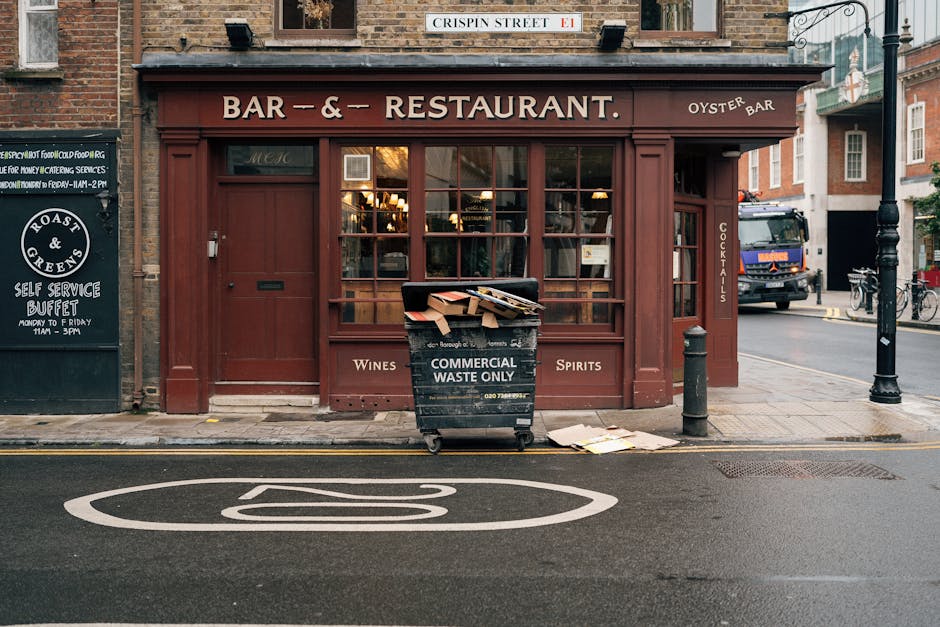
Carnaby Street rubbish removal guide for Soho flats
If you live in a Soho flat near Carnaby Street, rubbish removal can be awkward in a very specific London way. Narrow stairwells, limited lift access, timed collections, busy pavements, and neighbours who are not exactly thrilled by bags left in the hall all make simple clear-outs feel strangely complicated. This Carnaby Street rubbish removal guide for Soho flats is here to help you plan it properly, avoid the usual headaches, and choose the right approach for a small flat, a top-floor maisonette, or a busy rental property. Truth be told, a bit of planning saves a lot of dragging, noise, and last-minute stress.
Whether you are clearing out old furniture, bin bags after a tenancy change, mixed household waste, or a pile of items that never quite made it to the charity shop, the basics are the same: separate what can be reused, understand what needs careful handling, and make sure the removal method fits the building. If you need broader help with flat clearance or a more general waste removal service, it helps to start with the layout of your property and the type of waste involved. That little bit of clarity makes everything else easier.
Below, you will find a practical, human guide to what works in Soho flats, what usually goes wrong, and how to keep the whole process efficient and respectful to the building around you. No fluff. Just the stuff that actually matters.
Table of Contents
- Why Carnaby Street rubbish removal guide for Soho flats Matters
- How Carnaby Street rubbish removal guide for Soho flats Works
- Key Benefits and Practical Advantages
- Who This Is For and When It Makes Sense
- Step-by-Step Guidance
- Expert Tips for Better Results
- Common Mistakes to Avoid
- Tools, Resources and Recommendations
- Law, Compliance, Standards, or Best Practice
- Options, Methods, or Comparison Table
- Case Study or Real-World Example
- Practical Checklist
- Conclusion
- Frequently Asked Questions
Why Carnaby Street rubbish removal guide for Soho flats Matters
Soho is not a place where rubbish removal can be treated like a suburban driveway job. Carnaby Street and the streets around it are busy, tightly packed, and full of buildings that often were not designed for modern bulky waste routines. That matters because the route from your front door to the vehicle can be more difficult than the clearance itself.
In a flat, waste builds up in a slightly sneaky way. One broken chair becomes two bags of mixed junk, then a corner of the living room disappears under boxes, packaging, old bedding, and a lamp you meant to fix months ago. By the time you are ready to clear it, you may have more items than you first thought. That is normal. It happens all the time.
This guide matters because the wrong approach in a Soho flat can create avoidable problems: blocked stairwells, awkward lift use, missed collection slots, complaints from neighbours, or damaged walls and bannisters. It is also about respect. In a building where everyone shares a common entrance, one careless move with a mattress or a scratched wardrobe can become everyone's problem, not just yours.
Expert summary: In Soho flats, the best rubbish removal is rarely the fastest-looking option. It is the one that fits your access, your building rules, and the type of waste you actually have.
There is also a practical money angle. The better you sort the load in advance, the less likely you are to pay for avoidable extra labour or repeated trips. If you are comparing services, it can help to look at pricing and quotes alongside what the provider actually clears, how access is handled, and whether they can deal with furniture, mixed waste, or a full flat clear-out.
How Carnaby Street rubbish removal guide for Soho flats Works
Most Soho flat rubbish removal jobs follow a similar pattern, even if the building itself is awkward. First comes the assessment. Then comes sorting. Then loading, transport, and disposal or recycling. Simple in theory. A bit less simple in a fourth-floor flat with a narrow landing and a lift that seems to have a mind of its own.
The process usually starts with identifying what needs to go. A few bin bags is one thing. A mix of broken furniture, boxed items, and old appliances is another. If you are clearing out larger pieces, it may make sense to use a dedicated furniture clearance or furniture disposal service rather than treating everything as generic rubbish. That can make the job cleaner and more efficient.
After the items are grouped, the removal team will normally plan access. In Soho, that is a big deal. Can they park close enough? Is there a service entrance? Is there a lift? Will there be a need to carry everything down stairs? These details affect timing, labour, and how smoothly the job goes. They also affect how much noise and disruption your neighbours experience, which is not a small thing in a dense block.
Then there is disposal. Good waste handlers aim to separate recyclable materials where possible and send only the truly unrecoverable waste to disposal. If sustainability matters to you, it should, frankly, check whether the service has a clear approach to sorting and responsible disposal. A reliable starting point is the site's recycling and sustainability information.
For flats that need a broader clear-out beyond just rubbish, you may also want to look at home clearance or even house clearance if the property includes multiple rooms or storage areas. In practice, the service should match the volume and variety of items, not just the postcode.
Key Benefits and Practical Advantages
Good rubbish removal is about more than getting things out of sight. In a Soho flat, the benefits are surprisingly concrete.
- Less disruption: a planned removal reduces noise, hallway clutter, and repeated trips through communal areas.
- Better access management: narrow stairs, lifts, and loading points are handled with less guesswork.
- Faster turnaround: once the load is sorted properly, the clear-out can move much more quickly.
- Reduced risk of damage: fewer scratches on walls, doors, and floors when bulky items are moved with care.
- Cleaner recycling outcomes: separating furniture, mixed waste, and reusable items gives the material a better chance of being handled properly.
- Less stress during moves or tenancies: especially helpful when time is tight and there is a checkout, sale, or refit looming.
There is also a quiet psychological benefit. A flat can feel bigger almost immediately once the pile of rubbish is gone. You notice the floor again. Light reaches places it had been missing. The place breathes a bit. That may sound dramatic, but if you have lived among boxes for weeks, you know exactly what I mean.
If your rubbish removal is tied to a refurbishment, a redecorating job, or stripped-out fixtures, you might also need builders waste clearance. That is especially useful where old plasterboard, packaging, timber offcuts, or renovation debris are mixed in with household items.
Who This Is For and When It Makes Sense
This kind of guidance is useful for a few very different people, and the job can look slightly different for each one.
Tenants moving out: If you are at the end of a tenancy, you often need a quick, respectful clear-out with no mess left behind. Even a small amount of waste can become a problem if it is left too late.
Landlords and letting agents: You may need a flat cleared between occupancies, after a long-term tenant leaves, or when the property needs minor works before re-marketing. A tidy handover makes a difference, and not just visually.
Homeowners in flats: Some Soho flats gradually collect old furniture, hobby gear, and the kind of items that never seem urgent until suddenly they are. If you are reclaiming space, a proper clear-out makes sense.
Small businesses working from flats: Some people run a consultancy, design studio, or remote operation from a flat. If that sounds like you, business waste can creep in alongside domestic items. For larger mixed loads, business waste removal may be more relevant than a standard domestic clear-up.
Estate or sensitive clearances: Sometimes the job is not just about rubbish. It is about dealing with belongings carefully, separating keep, donate, recycle, and remove. In those cases, a service with broader experience in flat clearance can be a more sensible fit.
When does it make sense to act? Usually sooner than later. If bags are gathering in the hallway, if the lift is being used as a storage space, or if a move-out date is creeping closer, that is your cue. Waiting generally makes things harder. A bit rude of rubbish, really.
Step-by-Step Guidance
Here is a practical way to handle rubbish removal in a Soho flat without overcomplicating it.
- Walk the flat and list everything that needs to go. Be honest. Include the awkward item in the corner and the half-full boxes in the cupboard. Small things add up.
- Sort by type. Keep furniture, general rubbish, recyclable items, and anything special or potentially hazardous separate. This makes the collection more efficient.
- Check access properly. Measure large items if needed, note stair width, lift size, and any restrictions in the building. If the mattress can only turn sideways in the landing, you want to know that before collection day.
- Decide what can be reused or donated. Not everything needs to be thrown away. A sturdy table, for example, may still have life left in it.
- Prepare the items for removal. Flatten boxes, bag loose rubbish, empty drawers if necessary, and make sure items are safe to move.
- Book the right level of service. A small load, a partial clear-out, and a full flat clearance are different jobs. Choose accordingly, not by guesswork.
- Keep communal areas clear. Stage items as briefly as possible and avoid blocking shared corridors. Your neighbours will appreciate that.
- Confirm the disposal route. Ask how the waste will be sorted and handled, especially if you want recycling or responsible disposal.
A small practical tip: if you are dealing with a whole flat, set aside a "keep" zone first. One chair, one table, one box. That simple boundary can stop accidental disposal. I have seen people nearly lose a laptop charger, a passport folder, and once, oddly enough, a set of keys that had gone missing for three months. Human beings are brilliant at misplacing things when under pressure.
Expert Tips for Better Results
These are the details that tend to make a real difference in Soho flats.
1. Book with access in mind, not just volume. Two small loads through a difficult staircase can take longer than one moderate load through a decent lift. Access matters more than many people expect.
2. Take photos of the items before booking. Not every job needs an exact inventory, but a few clear photos help avoid confusion about size, condition, and what is included.
3. Separate anything fragile or awkward. Broken glass, loose ceramics, and damaged shelving should not be mixed into easy-carry bags. That is how scratches and cuts happen.
4. Keep building timing in mind. In a busy area like Carnaby Street, weekday traffic and pedestrian flow can shape the best time for a collection. Early mornings are often easier than late afternoons, but building rules come first.
5. Be realistic about the load. If the flat contains more than a few bulky items, it may be more cost-effective to treat it as a larger clearance from the start rather than adding pieces one by one.
6. Think about where items will land next. If you are replacing old furniture with new, arrange the delivery schedule so you are not left with nowhere to sit or sleep. Sounds obvious. It still gets overlooked.
7. Ask about safety and insurance. For stair-heavy buildings and awkward lifts, it is worth checking that the team works carefully and has suitable cover. The site's insurance and safety information can help you understand the standard they work to.
If the removal is part of a larger household tidy-up, then a more general home clearance approach can sometimes save time. For heavy or storage-related overflows, a loft clearance style plan can also be relevant, even in flats with converted roof spaces or internal storage levels.
Common Mistakes to Avoid
Most problems in flat rubbish removal are predictable. That is the annoying part. The good news is that they are also avoidable.
- Leaving everything until the last minute. This is the classic one. Suddenly the bags are at the door, the lift is booked, and you are still deciding what stays.
- Underestimating access issues. A sofa that looks manageable on paper can be a nightmare in a narrow Soho stairwell.
- Mixing different waste types. Furniture, general rubbish, and renovation debris are not all the same. Mixing them can slow the job down.
- Blocking communal areas. This creates friction fast, especially in shared buildings where space is already tight.
- Forgetting about fragile or sharp items. A loose mirror frame or broken shelving can create avoidable hazards.
- Assuming every collection service handles the same materials. Some jobs need specialist handling, especially if there is renovation waste or mixed furniture.
- Not checking what happens after collection. If sustainability matters to you, ask how reusable items and recyclable materials are managed.
A more subtle mistake is booking the wrong scale of service. A tiny collection for a huge task usually ends in a second visit, and nobody enjoys that. Not you, not the provider, not the person who has to squeeze past a hallway full of flattened boxes. Been there, seen it, never glamorous.
Tools, Resources and Recommendations
You do not need a warehouse full of kit to prepare a flat for rubbish removal. A few simple tools and habits go a long way.
- Strong bin bags: for general waste and loose items.
- Labels or sticky notes: useful for marking keep, donate, recycle, and remove.
- Measuring tape: handy for large items, doorways, and awkward corners.
- Basic gloves: useful when sorting mixed boxes or dusty items.
- Phone camera: helps you document what is going and share clearer information if needed.
- Flat trolley or sack truck: only if your building and access make it practical and safe.
On the service side, it helps to compare the type of clearance you need. If you are mainly removing old seating, wardrobes, or tables, look at furniture clearance. If you are dealing with a larger reset of the property, flat clearance may be the better fit. If you are simply removing mixed household rubbish and bagged waste, a more general waste removal service may be enough.
For people who want reassurance about the company behind the service, it is worth reading about the team's background on the about us page. If you are ready to make an enquiry, the natural next step is the contact us page. Simple, direct, no drama.
Law, Compliance, Standards, or Best Practice
Rubbish removal in London is not just about convenience. There are standards and duties in the background, even if they do not always feel front and centre on collection day. You do not need to become a legal expert, but you should work with providers who understand proper handling, documentation where needed, and responsible disposal practices.
In practical terms, best practice means waste should be moved safely, kept separated where appropriate, and passed on through lawful disposal or recycling routes. If you are getting rid of items from a flat, you should also respect building rules, shared access, and local nuisance concerns. That is especially relevant in dense areas like Soho where one careless collection can affect multiple neighbours in a small space.
For business-generated rubbish, the bar can be a little higher, because office or trading waste may need more careful handling than ordinary household waste. If that sounds familiar, office clearance or business waste removal may be more suitable than a standard domestic job.
Good providers should also work in line with sensible safety expectations: lifting carefully, protecting walls and floors where possible, and avoiding unsafe overloading of lifts or corridors. If a company is transparent about these basics, that is usually a good sign. Fancy language is less useful than plain competence, to be fair.
Options, Methods, or Comparison Table
There are a few common ways people handle rubbish removal in Soho flats. The right one depends on what you are clearing, how quickly you need it gone, and how much access the building gives you.
| Method | Best for | Pros | Watch out for |
|---|---|---|---|
| Self-clearance | Small loads, a few bags, light items | Low direct cost, full control | Time-consuming, awkward access, lifting strain |
| Man and van style clearance | Mixed household waste, small furniture, quick jobs | Flexible, simple booking, good for tight spaces | Needs clear access details and accurate load description |
| Flat clearance service | Full flat or partial flat clear-outs | Efficient for larger jobs, less stress, better for multiple item types | May be more than you need for one or two items |
| Specialist furniture disposal | Bulky sofas, wardrobes, tables, bed frames | Good for large awkward pieces, safer handling | Less useful if you also have lots of bagged waste |
| Builders waste clearance | Renovation debris, heavy mixed construction waste | Better fit for post-works mess | Not ideal for ordinary household items only |
The main decision is pretty simple: do you want to move it yourself, or do you want someone experienced to take it from the flat and handle the rest? In a Soho building with stairs, shared spaces, and limited parking, the second option often wins on pure practicality.
Case Study or Real-World Example
Imagine a one-bedroom flat just off Carnaby Street. The tenant is moving out at the end of the week. There is an old sofa, two broken dining chairs, a stack of cardboard from online deliveries, a dead fan, and a few bags of mixed clutter from the back of a wardrobe. Nothing outrageous. But enough to feel overwhelming when you look at it all in one go.
The mistake would be to treat it as a quick bag-and-go job. In reality, the sofa needs careful removal through a narrow hallway, the cardboard should be flattened, and the mixed clutter should be sorted before collection so it is not all treated as one messy pile. If the building has strict access times, that has to be built into the plan too. The lift, if there is one, may be booked by other residents. The loading point may be awkward. The corridor may be quiet at 7am but packed later.
A better approach is to separate the flat into zones: keep, remove, maybe-reuse. Then book the most suitable service, such as a flat clearance for the whole load or furniture disposal for the bulky pieces plus a general waste collection for the bags. The job becomes much calmer. Less rushing, fewer mistakes, and much less chance of leaving a trail of stress down the hallway.
That is the real difference in Soho. It is not just about taking things away. It is about taking them away cleanly, quietly, and without making the building feel like a worksite.
Practical Checklist
Use this before your collection day. It keeps the process tidy and saves you from the classic "oh, I forgot that" moment.
- Identify every item to be removed.
- Separate furniture, bagged waste, recycling, and anything fragile.
- Measure large items and check doorway or stair access.
- Confirm whether the lift can be used and at what times.
- Clear a path from the flat to the exit.
- Protect floors or corners if items are heavy or awkward.
- Set aside anything you want to keep.
- Flatten cardboard where possible.
- Check if any items need special handling.
- Review the booking details before the team arrives.
- Have a contact number ready if access instructions change.
- Make sure communal spaces stay as clear as possible.
It is a simple list, but honestly, it does most of the work. A good checklist saves time, and time is often the thing people are shortest on.
Conclusion
Rubbish removal in Soho flats near Carnaby Street works best when you treat it as a logistics job, not just a tidy-up. The access is tight, the buildings are varied, and the mix of waste can be more complicated than it first appears. But with a sensible plan, the right service type, and a bit of sorting before collection day, the whole thing becomes much easier.
Start with what you have, not what you hope you have. Check access, separate the load, and choose the method that actually suits the flat. That is the heart of it. Everything else is just detail, though important detail.
If you want a smoother experience, compare the service options, think about sustainability, and choose a team that understands flat access in central London. For many readers, the next best step is to review pricing and quotes or send an enquiry through the site's contact us page. Clear decisions make for cleaner flats.
Get a free quote today and see how much you can save.
And once the clutter is gone, the flat will feel different in that quiet, almost surprising way. More room. Less noise. A bit more breathing space. That matters, especially in Soho.
Frequently Asked Questions
What is the best way to arrange rubbish removal for a Soho flat?
The best approach is to sort the waste first, check access in the building, and choose a service that matches the volume and type of items. For small loads, general waste removal may be enough. For bigger jobs, flat clearance or furniture disposal is usually more practical.
Can rubbish be removed from a flat with no lift?
Yes, but access details become even more important. Stairs, landings, and doorway widths should be considered in advance so the team can plan safe movement of bulky items. Without a lift, preparation matters a lot more.
How do I know whether I need flat clearance or furniture clearance?
If you mainly have bulky household items such as sofas, wardrobes, and tables, furniture clearance or furniture disposal may be the better fit. If the flat has a wider mix of items, including bags, boxes, and general clutter, flat clearance is more suitable.
What should I do with cardboard, old boxes, and packaging?
Flatten cardboard where possible and keep packaging separate from bulky items. This makes removal easier and can support better recycling outcomes. It also helps keep the flat less cluttered before collection day.
Is it worth clearing a flat before moving out?
Yes, especially in a busy area like Soho where access and timing can be tight. A proper clear-out reduces stress, helps you leave the property in good order, and avoids last-minute panic over forgotten items.
Do I need to separate rubbish from items I might donate or reuse?
Absolutely. It is a good idea to create separate piles for keep, donate, recycle, and remove. That avoids accidental disposal and makes the process far more efficient. A small bit of sorting goes a long way.
What if the waste includes items from a renovation or repair job?
If there is plaster, timber, fittings, or mixed debris from works, builders waste clearance may be more appropriate than ordinary household rubbish removal. The service should fit the type of waste, not just the flat itself.
Can a rubbish removal service handle business items from a flat?
Yes, if the items are business-related and the provider offers the right service. Office equipment, filing, packaging, and similar materials may be better handled through business waste removal or office clearance, depending on the load.
How do I avoid disturbing neighbours during collection?
Keep communal areas clear, avoid leaving items in the hallway for too long, and choose a collection time that works with the building's routine. Quiet, well-planned movements are always better than rushed ones.
What should I ask before booking a rubbish removal service?
Ask what types of waste they handle, how they manage access, whether they can deal with stairs or lifts, and what happens to recyclable materials. It is also sensible to check pricing details and any relevant safety information.
Is sustainability really something I should think about for flat rubbish removal?
Yes. Even for a small job, sorting items properly and choosing a provider with a clear recycling approach is a sensible habit. If you care about reducing waste where possible, it is worth asking how items are handled after collection.
Where can I learn more about the company before booking?
The most useful places are usually the about page, pricing information, and any pages covering recycling, safety, and terms. That gives you a clearer sense of how the service works and what standards they follow.